
Extraordinary cancer ‘cure’. Does the science back up the media hype?
19th February 2016 - Last modified 12th January 2024
Written by Dr Kelly Hooper.
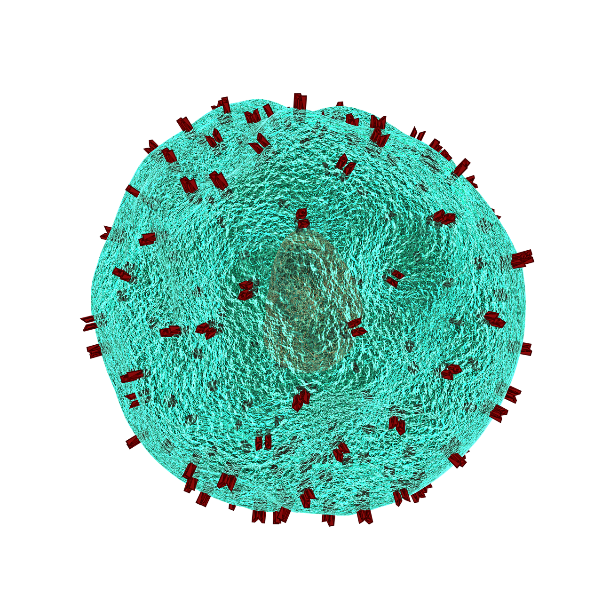
Killer T-cells, as the one shown in this image, have been modified to target their cell surface receptors (red) to tumour antigens in a new study.
“Extraordinary’ treatment could be cancer breakthrough” – ITV
“Excitement at new cancer treatment” – BBC
An extraordinary new cancer breakthrough hit the headlines this week, with some major newspapers even hailing it as a ‘lasting cure’. More than 90% of terminally ill patients have reportedly entered remission following treatment with the new immunotherapy, and the data from early-stage clinical trials has been described as ‘unprecedented’.
The data was presented at the American Association for the Advancement of Science’s annual meeting in Washington DC by scientists from the Fred Hutchinson Cancer Research Centre in Seattle. The clinical trial was based on killer T-cells taken directly from patients with different types of blood cancers, including acute lymphoblastic leukaemia (ALL), chronic lymphocyte leukaemia and non-Hodgkin lymphoma.
Their natural propensity to provide long-term immune protection from foreign agents makes T-cells the ideal tool for this form of anti-cancer treatment. Building upon these valuable properties, the researchers manipulated the genomic information to form Chimaeric Antigen Receptor T-cells, which express custom-designed receptors on the cell surface. Once these customised cells are reintroduced into the patient’s body, they will specifically recognise antigen residing on the tumour cells and mark it for destruction, and then naturally proliferate for long-term protection. Although detailed findings are yet to be published, the study so far has found:
• 90% of 35 patients with ALL showed complete remission
• 80% of 40 patients with other forms of leukaemia responded to treatment
• ‘About half’ of patients were in complete remission after 18 months
The devil in the details
While the results so far are definitely very exciting, and any success in cancer treatment is sure to be big news, it is probably best to take a slightly more careful approach than shown by the media. A related blog by Cancer Research UK is also quick to add a cautionary note to temper the media’s excitement. For example, how has the response been measured? And what is the timescale of remission (the trial has lasted 18 months so far, but relapse is always possible)? It is also not yet known how patients with a variety of solid and blood cancers at a variety of stages might respond.
Perhaps the most worrying aspect of this treatment is the potential for severe side effects. Known as cytokine-release syndrome, many patients were affected, with seven patients requiring intensive care and two patients dying.
That doesn’t mean that the science behind this approach should be discounted. In fact, the opposite is true, and it will be interesting to see the published peer-reviewed research. Harnessing the immune system to treat cancer isn’t new and has been an exciting possibility for a number of years, and this research is likely to add further support. It seems that we are on the right track, and immune therapy of cancer is likely to play a huge part in cancer treatment in the future.
Our natural curiosity and scientific thinking here at Alto shows in the content we create, so look no further than our writing team if you need some help.
Written by Dr Kelly Hooper- Account Executive