
The gut-brain axis: challenging our understanding of neurological disease
3rd May 2022 - Last modified 19th October 2023
20 years of Alto. 20 years of science. #3
By Peter Cussell PhD, Science writer

As part of Alto Marketing’s 20 year celebrations, we’re looking back at some of the most important advances in science over this time in our blog series “20 years of Alto. 20 years of science.” We gave each of the scientists in the Alto team the chance to write about an area they love or that they’ve worked on in their past lives in the laboratory. Here, Peter Cussell gives some fascinating insight into the relationship between what happens in our gut and our brains…
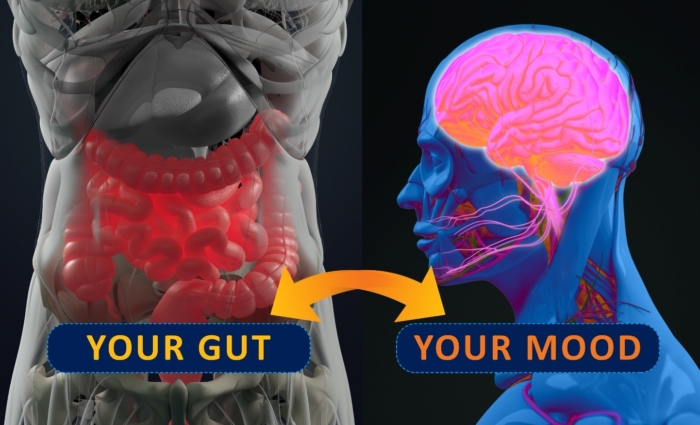
Ever had a strong “gut feeling” when making a tough decision? The adage is used so often, and it is indeed supported by our physiological make-up. In fact, scientists have long known of a strong signalling network between the gut and brain which “speak” to one another through nervous, endocrine and immune signals. Known as the gut-brain axis, this complex network regulates gut function in times of health and disease. Crucially though, since the gut-brain signalling network is bi-directional, dysfunction in the gut can have a knock-on impact on our brain health.
Over the last decade, a once overlooked element of the gut has emerged as a major element of the gut-brain signalling axis, and is causing a paradigm shift in our understanding of neurological conditions – from Parkinson’s disease to depression. This gut component, once thought of as a mere digestive aid, is manifested by the billions of resident bacteria and microorganisms that live in the gut, known as the gut microbiota.
Not just freeloaders…
Contrary to being passive passengers in our bodies, extensive research has uncovered the crucial role of the gut microbiota in the function of our immune system, metabolism and organ development. Throughout our lives the composition and activity of the gut microbiota can change significantly in response to host factors, such as age and genetics, or to environmental factors like diet and lifestyle. Because the microbiota can produce and modify various metabolic, immunological and neurochemical factors in the gut, these factors can have marked consequences for the nervous system [1]. But how much of an impact can our resident microorganisms really have upon our brains? Let’s look at some of the recent research to emerge linking the gut microbiota to brain pathophysiology.
The gut-brain axis and neurodevelopmental disorders
The gut microbiota has been found to have a significant influence during our developmental stages, affecting the growth of our brain and nervous system through changes to gene expression and neurochemical metabolism. As a result, the gut microbiota has been implicated in neurodevelopmental conditions – such as Autism Spectrum Disorder (ASD), where gastrointestinal dysfunction is regularly reported in early years of life. Mouse studies have demonstrated that gut microorganisms are capable of regulating core behaviours that feature in ASD: germ-free mice show markedly lower sociability when compared with their microbiota-containing friends. Further studies have also shown germ-free mice to exhibit more stress/anxiety-related behaviours and performed significantly worse in learning and memory tasks compared with conventional mice [2].
Parkinson’s disease: from gut to brain?
Numerous studies conducted over the last 10 years have found a strong connection between gut dysfunction and neurodegenerative diseases like Parkinson’s disease (PD), the second most prevalent neurodegenerative disease after Alzheimer’s. PD is characterised by a loss of motor control due to depletion of dopaminergic neurons in the brain’s substantia nigra region, and symptoms include a tremor, rigidity and difficulty walking. Approximately 80% of PD patients report gastrointestinal issues, and this is routinely experienced for several years prior to diagnosis. PD patients regularly present with gut inflammation, increased intestinal permeability, and the build-up of alpha-synuclein (the protein which accumulates in the brain of PD patients) begins in the gut’s enteric nervous system. As the disease progresses, alpha-synuclein accumulation travels from gut to brain via the vagus nerve, strongly suggesting that the disease starts in the gut before moving to the brain [3].
So it seems that PD starts in the gut, but is this really triggered by host bacteria? There is certainly evidence to suggest so. The composition of the microbiota profile was recently demonstrated to be distinct between PD patients and healthy individuals – for instance increased numbers of bacteria of the family Enterobacteriaceae are found in PD patients, an increased abundance of whichpositively correlates with disease severity. Intriguingly, this same family of bacteria is also prevalent in the microbiota of Crohn’s disease patients, who carry an increased risk of developing PD [4].
Altered microbiota in mental health conditions
The gut microbiota is also shining light on mental health conditions like stress, anxiety and depression – highly prevalent conditions which have previously been viewed as driven by defects in brain functionality alone. Now, the gut microbiota has been demonstrated to affect stress response pathways in the brain. Our stress homeostasis process, known as allostasis, helps us to break down stress hormones like glucocorticoids following a stressful event, and our gut microbiota are an important component in regulating allostasis. Germ-free mice exhibit exaggerated stress hormone production following a stressful event suggesting poor allostasis in individuals without microbiota, while administering probiotics has been demonstrated to overcome stress in several animal models.
Patients with depression, stress and anxiety disorders have been found to have altered gut microbial species compared to healthy adults, and some studies have even suggested that these mental health conditions could be triggered by an initial infection or dysbiosis in the gut, something that has been demonstrated in various animal models [3].
Could the microbiota be targeted as a therapeutic?
Since the gut microbiota has been implicated in so many areas of nervous system dysfunction, it has been proposed that probiotic treatments could be used to promote healthy microbiota as a preventative or therapeutic treatment. Early studies investigating probiotics and mental health show promising results – volunteers treated with Lactobacillus helveticus and B. longum reported long-term improvements in symptoms related to stress/anxiety/depression. More encouraging results from early trials have come from studies in children with ASD, which have shown that probiotics can improve some neuro-behavioural symptoms [5]. However, many of these studies are reporting preliminary data and the effects of more long-term probiotic treatment is crucial in order to get a clearer picture. Despite this, these early results do show positive effects of probiotic treatments, and should give hope to those with neurological disorders that novel treatments may be borne from this research.
A pivotal crossroad – the gut-brain axis
Mounting evidence from clinical and research spheres is demonstrating how the relationship between the gut microbiota and the nervous system influences developmental and pathophysiological processes in the brain and beyond. This complex system has only been considered very recently, and many essential questions remain unanswered – notwithstanding, the strong correlation between gut dysbiosis and a range of neurological conditions points towards gut microbiota playing a major role in the gut-brain axis. This is an exciting new frontier in biomedicine, and targeting the gut with probiotics, as well as promoting a healthy diet and lifestyle should be considered as real preventative measures for various neurological and mental health conditions.
About me :
My research background in physiology/neuropharmacology has primarily focused upon characterising novel neuronal regeneration drug candidates in vitro. In addition, I have always had a keen interest in microbiology, and have been involved in various microbiological studies throughout my years in the lab. I find it fascinating that these apparently disparate disciplines can have this inextricable relationship with such profound effects in times of brain/gut function and dysfunction. Unravelling the mysteries of the microbiota-brain axis could only have been achieved with interdisciplinary collaboration, something in which I am a big believer, and which should be championed so that future discoveries and innovation might be uncovered more swiftly.
References
1.Cryan, J. F. et al. The Microbiota-Gut-Brain Axis. Physiological reviews. 99 4, 1877–2013 (2019).
2.Umbrello, G. et al. Microbiota and neurologic diseases: potential effects of probiotics. Journal of translational medicine. 14 1 298 (2016).
3.Morais, L. H. et al. The gut microbiota-brain axis in behaviour and brain disorders. Nature reviews: microbiology. 19 4 241–255 (2021).
4.Scheperjans, F. et al. Gut microbiota are related to Parkinson’s disease and clinical phenotype. Movement disorders: official journal of the Movement Disorder Society. 30 3 350–358 (2015).
5.Vuong, H. E. et al. The Microbiome and Host Behaviour. Annual review of neuroscience. 40, 21–49 (2017).