
From Jurassic Park to the real world? A close look at how ancient DNA sequencing has progressed in the past 20 years.
21st October 2022 - Last modified 18th October 2023
20 years of Alto. 20 years of science. #12
By Ashley Hayes, Science Writer/Account Executive

As part of Alto Marketing’s 20 year celebrations, we’re looking back at some of the most important advances in science over this time in our blog series “20 years of Alto. 20 years of science.” In light of the recent Nobel Prize award in Physiology or Medicine, this next blog post focuses on the groundbreaking progress in ancient DNA sequencing that has been made over the past 20 years, and the impact this has had on research.
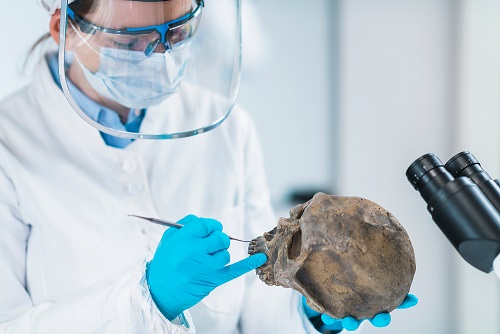
Recovering ancient DNA
Ancient DNA is a powerful resource for research, providing a window into prehistoric life. DNA has been extracted from ancient specimens recovered from a range of different sources, including fossils, sediments and preserved tissues from museums, paleontological and archeological sites across the world.
Ancient DNA can be obtained from different tissue types, including hair, soft tissue and even paleofaeces. However, bones and teeth offer the best chance of extracting ancient DNA, with those buried in cold, dry conditions – such as permafrost – faring particularly well due to better DNA preservation.
You may wonder, just how ancient is the DNA that we can study?
Recently, DNA has been analysed from a mammoth tooth preserved in Siberian permafrost that was an astonishing ~ 1.65 million years old! [1] Some other examples include the analysis of DNA extracted from a range of prehistoric animals dating back thousands of years, such as a 560,000–780,000-year-old horse [2] and a 360,000-year-old cave bear [3].
What can ancient DNA tell us?
The study of ancient DNA could have wide-reaching applications in the world of research. Unravelling this early example of genetic code could unlock secrets of how life has evolved. For instance, the comparison of ancient DNA to that of modern-day species could identify novel genes that have helped shape us. In addition, this analysis can help identify genes that have allowed some species to adapt to the vast documented changes in climate throughout history.
The identification of climate-adapting genes may be critical for our adaptation to future, predicted climate change.
Not only could ancient DNA help us learn about the past, this genetic information could be key to ensuring our future.
Ancient DNA sequencing: from dream to reality
Before the birth of Next Generation Sequencing (NGS), the sequencing of ancient genomes was a work of science fiction. The 1989 book ‘Jurassic Park’ that inspired the release of the Jurassic Park film was a prime example of this! The plot describes the extraction of DNA from ancient insects to give rise to the cloning of dinosaurs.
In the decades since the release of Jurassic Park, we haven’t yet cloned any prehistoric animals (phew!). However, the once fictional phenomenon of ancient DNA sequencing has been brought into the real world.
Svante Pääbo – the Godfather of ancient DNA sequencing
Over the past 20 years, the incredible progress in ancient DNA sequencing can be attributed to the development of Next-Generation Sequencing (NGS). This term describes several sequencing techniques, which were firstly developed in the mid-2000s. This advancement revolutionised DNA sequencing, allowing for much faster sequencing with a higher throughput and reduced costs.
The progress in ancient DNA sequencing can also be attributed to paleogeneticists including Svante Pääbo. Pääbo and his team optimised NGS techniques for use with ancient DNA, making adjustments to the DNA extraction process to minimise issues such as contamination and degradation. This ultimately led to the publication of the first draft of any ancient genome by Pääbo’s group in 2010. This was the Neanderthal genome, our ancestor that walked the earth (specifically Eurasia) up until around 40,000 years ago [4]. Pääbo has been awarded with the 2022 Nobel Prize in Physiology or Medicine in credit of his ground-breaking research into ancient DNA.
Several complete, high-quality Neanderthal genomes were published by Pääbo’s groups during the 2010s, using DNA extracted from skeletal remains found in a variety of archaeological sites across Europe.
As a result of the sequencing of the Neanderthal genome, there have been some major discoveries in human evolution and novel information on modern-day human health and physiology has been uncovered. The techniques developed by Pääbo have also paved the way for the sequencing of other prehistoric species.
The undiscovered secrets of Neanderthal DNA
One of the most exciting discoveries in human evolution following the sequencing of the Neanderthal genome was the identification of a new group of human ancestors, the Denisovans. This group was named after the Denisovan cave in Croatia where the specimen was found [5]. The DNA extracted from this specimen revealed that Denisovans co-existed and mixed with modern humans in East Asia [6], completely changing our knowledge of how modern humans came to exist.
Interestingly, the sequencing of the Neanderthal genomes has also provided new insight into aspects of our health. For instance, Neanderthal genes found in the DNA of present-day humans have been shown to be associated with increased susceptibility to rheumatoid arthritis, high LDL cholesterol, eating disorders, schizophrenia [7], and high COVID-19 severity [8]. Neanderthal genes are also associated with our physical attributes, including high-altitude adaptation for populations in the Tibetan Plateau [9].
The future of ancient genomics
Since the sequencing of the Neanderthal and Denisovan genomes, the genomes of other prehistoric species have been reconstructed, including animals, plants and microbiota.
The study of ancient animal genomes could help answer puzzling questions on animal evolution. The genomes of several extinct bird species have been identified, including the dodo, the passenger pigeon and the African bush moa.
Comparing the genomes of prehistoric and modern-day bird species could help us uncover how birds lost their teeth, learned to sing and how they are able to fly. As ancient birds are the only surviving dinosaurs, the study of these ancient genomes could also provide insight into how birds survived the meteor impact that killed all of the other dinosaurs.
Comparative genomics could also help us to adapt to future climate change, and maybe avoid mass extinction. An example of this is the sequencing of the woolly mammoth genome, which has provided clues into how this species adapted to Arctic climates.
Comparing the genomes of the woolly mammoth and modern-day Asian elephants has identified several cold-resistant woolly mammoth genes. As Asian elephants are endangered, the integration of these cold-adapted genes into their genomes could improve the climate adaptability of this species to help ensure its survival.
Conclusions
Advances in DNA sequencing technologies have supported vast progress in ancient DNA sequencing.
Although ancient DNA sequencing has already helped answer key questions in human evolution, health and physiology, the sequencing of other prehistoric species could provide novel insight into animal evolution and physiology. This could potentially help save species from extinction.
References
(1) van der Valk T., et al. Million-year-old DNA sheds light on the genomic history of mammoths. Nature. 2021; 591(7849):265-9.
(2) Orlando L., et al. Recalibrating Equus evolution using the genome sequence of an early Middle Pleistocene horse. Nature. 2013; 499(7456):74-8.
(3) Barlow A., et al. Middle Pleistocene genome calibrates a revised evolutionary history of extinct cave bears. Current Biology. 2021; 31(8):1771-9.
(4) Green R.E., et al. A draft sequence of the Neandertal genome. science. 2010; 328(5979):710-22.
(5) Reich D., et al. Genetic history of an archaic hominin group from Denisova Cave in Siberia. nature. 2010;468(7327):1053-60.
(6) Massilani D., et al. Denisovan ancestry and population history of early East Asians. Science. 2020;370(6516):579-83.
(7) Prüfer K., et al. A high-coverage Neandertal genome from Vindija Cave in Croatia. Science. 2017;358(6363):655-8.
(8) Kerner G., Quintana-Murci L. The genetic and evolutionary determinants of COVID-19 susceptibility. European Journal of Human Genetics. 2022;30(8):915-21.
(9) Huerta-Sánchez E., et al. Altitude adaptation in Tibetans caused by introgression of Denisovan-like DNA. Nature. 2014;512(7513):194-7.