
Your Life is Dictated by Your Circadian Rhythm
1st September 2025
By Mia Turner, Scientific Communications & PR Intern
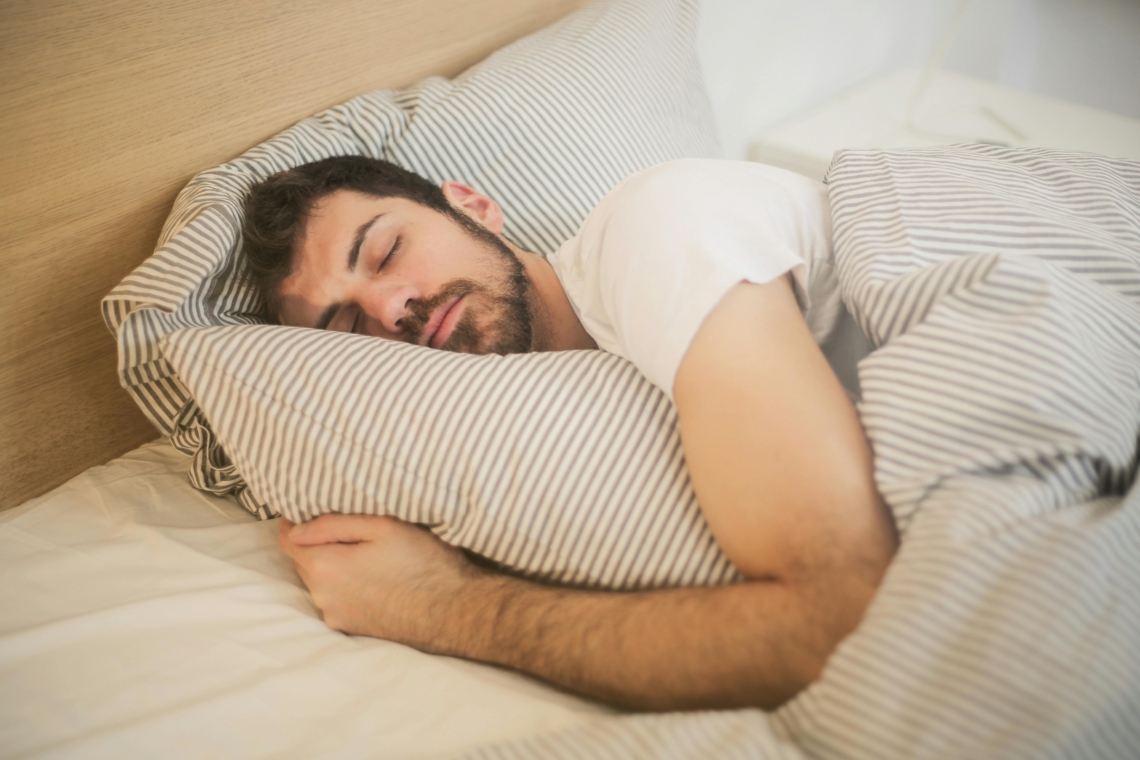
Everyone loves sleep, whether it’s an afternoon nap on Christmas Day or staying in bed after a big night out – but how much do you know about the science of sleep? Why do you really need it? And what do your genetics have to do with it?
The circadian rhythm is the 24-hour internal clock [1] that, from the suprachiasmatic nucleus (SCN) in your brain, regulates the everyday cycle of alertness and sleepiness by responding to changes in light and your environment. It involves physical, mental and behavioural changes, all in one 24-hour period [2].
The system has evolved to help humans adapt to changes in environment – but the circadian clock itself doesn’t reflect environmental time but rather anticipates it, meaning that it thrives on a stable exposure to light and a regular lifestyle. As a result, there are many different aspects of the circadian rhythm that are important to consider for your everyday life and health.
Recently, the desire to know more about sleep and our ‘circadian health’ has driven a large rise in wearable fitness trackers that utilise data from your circadian rhythm to provide health insights – including Whoop, the cult-favourite Oura Ring, and Garmin. Each of these products provides the ability to track and better understand how your daily activities affect your circadian, and overall, health. But they don’t tell you everything – do they? In this week’s article, we’ll be highlighting elements of the circadian rhythm you may not know about and how these play into your everyday life and health tracking.
What Are the Mechanisms of the Circadian Rhythm
The phasic expression of ‘clock’ genes drives what we see as the manifestations of the circadian rhythm, through what’s called a cell intrinsic transcriptional/translational feedback loop (TTFL). In essence, the forward portion of the loop promotes the ‘negative’ elements of the loop, which increase until the end of the day. At this point they’re able to translocate into the nucleus and repress the positive arm. Then, once degraded, the positive arm is free to restart the cycle. This loop creates a self-fulfilling pattern of oscillation that fits (nearly) to a 24-hour period [3].
Several external factors are known to affect the TTFL, and unsurprisingly, they’re also factors you expect to affect your sleep, including light exposure and external disruptions such as jet lag or artificial light exposure late at night. As such, it’s important to consider how different activities in your life can affect your sleep at night, because they often end up having long-term effects on your overall health too [3].
But, it’s not a uniform 24-hour cycle. Ever wondered why you experience an afternoon slump in energy?
In addition to the 24-hour circadian rhythm, sleep/wake homeostasis also plays an important role in the energy fluctuations we experience over the course of a single day. It tracks the build-up of pressure to sleep over the course of a day where the longer you’re awake the more pressure there is and, as you sleep, this pressure dissipates.
However, if our drive to sleep was solely regulated by this process, we’d find ourselves swinging between alertness and sleep throughout the day – being the most alert in the morning and feeling that wear off quickly during the day. This is where the circadian rhythm and its creation of a 24-hour pattern comes in to prevent you from falling asleep in the middle of the day.
Additionally, these two systems can influence each other in different ways [4]. For example, if you experience sleep deprivation – which is effectively increased homeostatic sleep pressure – this blunts your circadian system’s response to light and therefore light exposure becomes less effective at resetting or adjusting the rhythm.
Why is the Circadian Rhythm Important (and why do we care about it now?)
The circadian rhythm affects your sleep, body temperature, hormones, appetite and other important functions. When functioning efficiently and without interruption, the circadian rhythm optimises energy expenditure and helps to anticipate changes in the environment, enabling maintenance of overall health [5]. However, abnormal circadian rhythms present several consequences that impact negatively on physical or mental wellbeing – or both. An abnormal circadian rhythm can be linked to obesity, diabetes, depression and sleep disorders such as insomnia.
However, as society becomes increasingly interested in tracking and optimising health, the need to better understand the role of the circadian rhythm in health and disease also rises. Fortunately, this growing interest from the public has meant that there’s also increased focus from the scientific community and therefore new progress being made constantly.
Societal Change and Misalignment
You’d have to be dreaming to think that, with a full-time job or being at school/university, you could perfectly align your sleep schedule to your circadian rhythm. But what are the consequences of not being able to? Circadian misalignment describes the mismatch between the natural sleep-wake cycle and timing of environmental cues such as light exposure, or social demands like work schedules [6].
A typical adolescent sleeping pattern (that many describe as laziness!) is actually the effect of a delayed sleep phase. Puberty triggers a shift in the circadian rhythm, which results in a delayed shift of approximately 2 hours, meaning that teenagers naturally wake later and go to sleep later than younger children or adults [7]. Additionally, teenagers accumulate sleep pressure in sleep-wake homeostasis more slowly making it more difficult for them to fall asleep early and therefore negatively impacting on both their quality and quantity of sleep [8].
Studies have been conducted and show that delaying the start of secondary school by just one hour would have positive economic impact in the long-term due to the health benefits for adolescents [9]. Such economic benefits would come because of higher academic performance, amongst other factors. This delay would bring the ‘societal clock’ of adolescent life closer to their natural rhythm of waking up, therefore providing less circadian misalignment and overall health benefits
In general, modern technology and the world of today has adapted to be wholly independent of the circadian rhythm. Things like long flights between continents and shift work can have a substantial effect on circadian health. On a smaller scale, exposure to artificial light from a phone for a short period in the night can also have negative health consequences and lead to anxiety, irritability and depressive behaviours or potentially larger issues.
Circadian Rhythm Disorders
In more extreme cases, the circadian misalignment caused by either daily scheduling or lifestyle choices can result in disorders of the circadian rhythm. These can vary in terms of severity, and in fact, the most well-known circadian disorder is jet lag. In this case, circadian rhythms are disturbed by air travel through two or more time zones. Quite famously, President George H. W. Bush fell ill suddenly during a state dinner while on a lengthy tour of Asia, which his spokesperson later attributed to jet lag from his extensive travel [10]. Much less famously, you’re likely to have felt the effects of jet lag after getting off a long flight, including disrupted sleep patterns leading to daytime sleepiness, poor sleep quality and difficulty concentrating [11].
There are also more serious forms of circadian rhythm disorders; delayed sleep phase disorder involves not being able to fall asleep before the middle of the night and therefore sleeping well into the next day.
Another, perhaps more common, disorder is shift work disorder. This is simply caused by the conflicting schedules of shift work with the body’s natural rhythm, resulting in ongoing sleepiness and fatigue. When put in the context of healthcare workers, this disorder can quickly become life-threatening to others as it increases the risk of medical errors, reduces patient safety and can result in omitted care [12]. However, fitness trackers have become popular amongst the healthcare community to combat this exact risk since they can provide individuals with data to better support their lifestyles and provide more sustainable outcomes.
Fitness Trackers
Recently, there has been increased attention paid not only to the topic of sleep, but also more specifically to circadian health and how it can be best optimised for day-to-day living.
The concept of ‘circadian’ was first coined by Franz Halberg more than 50 years ago, yet its prevalence in modern society is only growing. The concept of circadian wellness, involving timing your daily schedule around your circadian rhythm, has gained more attention due to people using fitness trackers such as Oura Rings and Whoop, which utilise circadian rhythm data.
The current standard to monitor circadian rhythm involves repeated measurements of activity cycles, biomarkers and body temperature, which can quickly become tiresome, slow and invasive, making them impractical for long-term use [13]. Alternative methods used by fitness trackers such as Whoop and Oura Ring include tracking wrist temperature and heart rate instead to provide a still highly accurate image of circadian health.
These trackers also present an opportunity from a research and public health perspective, amassing huge volumes of health and fitness data across the population. However, the ability for researchers to analyse the large data sets produced by the widespread use of fitness trackers is currently limited due to the lack of reliability in results the trackers produce [13]. There has been evidence of variation due to ethnicity, physiological condition and behavioural patterns so therefore, comparison is not yet fully viable.
Regardless of this, the opportunity for the public to gain a better understanding of their own circadian health is substantial and with the right knowledge attached, can allow individuals to optimise their lives and schedules according to their internal clock. It offers a substantial opportunity for health and wellness improvements.
In summary, the impact of the circadian rhythm on everyday life cannot be overstated. There is still so much space for more research and understanding on this topic, but the ground that has already been covered shows how the decisions we make daily can have substantial effects on our sleep and overall health. Indeed, society’s fascination with this is only growing and the rise of fitness trackers serves to improve our knowledge and understanding so that even more gains can be made.
References
1. Reddy S, Sharma S, Reddy V. Physiology, Circadian Rhythm [Internet]. Nih.gov. StatPearls Publishing; 2023. Available from: https://www.ncbi.nlm.nih.gov/books/NBK519507/
2. Organ S. Why do I always get an energy crash in the afternoon? [Internet]. BBC Science Focus Magazine. 2020 [cited 2025 Aug 26]. Available from: https://www.sciencefocus.com/the-human-body/why-do-i-always-get-an-energy-crash-in-the-afternoon
3. Andreani TS, Itoh TQ, Yildirim E, Hwangbo DS, Allada R. Genetics of Circadian Rhythms. Sleep Medicine Clinics. 2015 Dec;10(4):413–21.
4. Deboer T. Sleep homeostasis and the circadian clock: Do the circadian pacemaker and the sleep homeostat influence each other’s functioning? Neurobiology of Sleep and Circadian Rhythms. 2018 Jun;5(2451-9944):68–77.
5. Focus Shifts from Sleep to True Circadian Health [Internet]. Global Wellness Summit. Available from: https://www.globalwellnesssummit.com/2020-global-wellness-trends/circadian-health/
6. Lumie [Internet]. Lumie. 2024 [cited 2025 Aug 26]. Available from: https://www.lumie.com/blog/what-is-circadian-misalignment
7. UCLA Health. Sleep and Teens – Sleep Disorders | UCLA Health [Internet]. www.uclahealth.org. 2023. Available from: https://www.uclahealth.org/medical-services/sleep-disorders/patient-resources/patient-education/sleep-and-teens
8. Carskadon MA, Tarokh L. Developmental changes in sleep biology and potential effects on adolescent behavior and caffeine use. Nutrition Reviews. 2014 Oct;72:60–4.
9. Dariush FARHUD, ARYAN Z. Circadian Rhythm, Lifestyle and Health: A Narrative Review. Iranian Journal of Public Health [Internet]. 2018 Aug;47(8):1068. Available from: https://pmc.ncbi.nlm.nih.gov/articles/PMC6123576/
10. How jet lag hurts diplomats, without them even realizing it. Washington Post [Internet]. Available from: https://www.washingtonpost.com/posteverything/wp/2015/05/20/how-jet-lag-hurts-diplomats-without-them-even-realizing-it/
11. NHS Choices. Jet lag [Internet]. NHS. 2019. Available from: https://www.nhs.uk/conditions/jet-lag/
12. Griffiths PD, Chiara Dall’Ora. Shift work in hospitals: what are the effects on patient and employee outcomes? ResearchGate [Internet]. 2017 Feb 28 [cited 2025 Aug 26];2(1). Available from: https://www.researchgate.net/publication/320371731_Shift_work_in_hospitals_what_are_the_effects_on_patient_and_employee_outcomes
13. Shandhi MMH, Wang WK, Dunn J. Taking the time for our bodies: How wearables can be used to assess circadian physiology. Cell Reports Methods. 2021 Aug;1(4):100067.