
The Higgs Boson: The Nobel Prize Winner Half a Century in the Making
3rd May 2022 - Last modified 19th October 2023
20 years of Alto. 20 years of science. #2
By Olivia Hillson, Science writer

As part of Alto Marketing’s 20 year celebrations, we’re looking back at some of the most important advances in science over this time in our blog series “20 years of Alto. 20 years of science.” Let’s look at another Nobel prize and another huge win for science – but this time in physics – with the discovery of the Higgs boson!
The search for the Higgs boson, sometimes called the Higgs particle, started decades ago. As with many of the big questions in physics, we knew that there should be a Higgs boson long before we found out that there was one.
By the 1960s, in a contradiction all too common in physics, research showed that fundamental particles (electrons and quarks, the particles which make up atoms) both must have mass and must not have mass. Essentially, the equations only worked if the particles were assumed to have no mass, but mass was also something the physicists knew they had. And so the search was on to find a way to reconcile the issue.1
Luckily, in 1964 Peter Higgs offered an elegant solution. Higgs’ theory suggested that the particles themselves could be without mass, satisfying the equations, and that the mass properties actually came from the particles interacting with a field, dubbed the Higgs field. His idea was that, while a particle moving though a vacuum would have no drag, if there was a field interacting with the particle as it moved then the drag force created would account for the mass.2

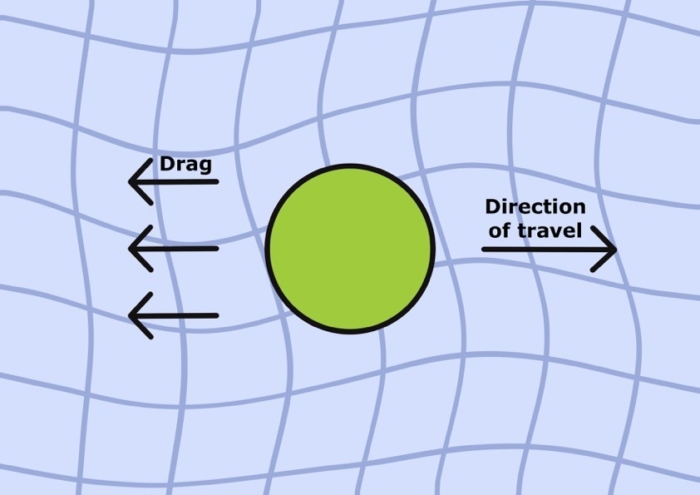
Higgs’ first paper putting forward his theory was rejected immediately. The concept of an invisible field through all of space that gives particles mass was thought to be too much of a leap. Over time, however, it became a consensus within the field that Higgs’ proposal should (and would) be taken seriously. So seriously, in fact, that in 1998 when CERN (The European Organization for Nuclear Research) began construction on the Large Hadron Collider (LHC), finding experimental proof of the Higgs field was one of its main objectives.
Battling for proof of the Higgs boson: the experiment that altered the universe
The LHC is the world’s largest particle collider. In 2011, three years after the LHC first went live, the experiment looking for the Higgs field began. The premise was a relatively simple one: to collide particles with such speed that they agitate the Higgs field with enough of a force that a quantum manifestation of the field (a particle) appears.3
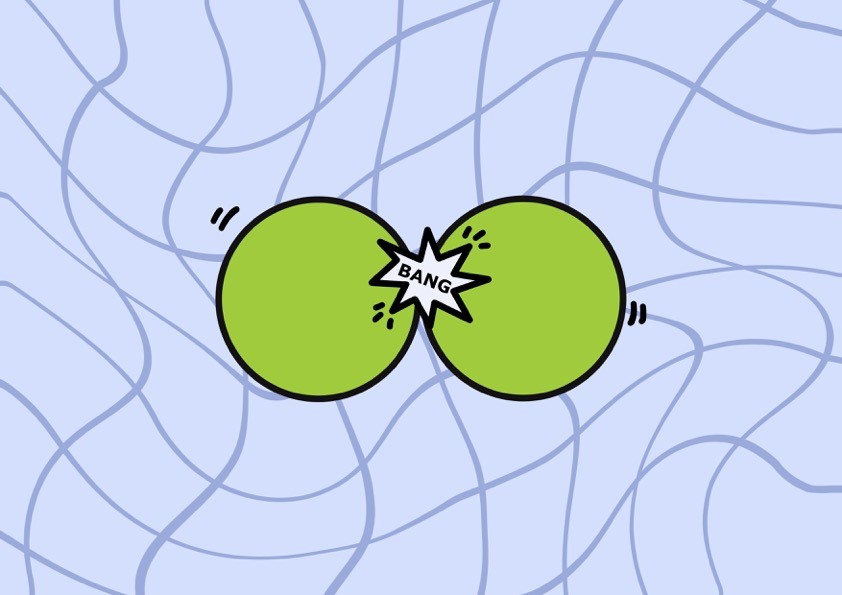
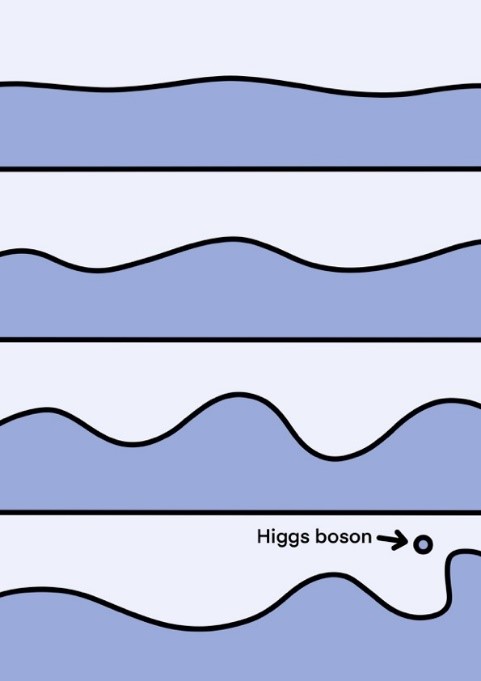
Although this concept was nothing new (for example, the photon (light particle), is the quantum manifestation of the electromagnetic field4), looking for a particle when you don’t quite know what you’re looking for – or even if it really exists – is a challenge not to be understated.
On the warm, overcast morning5 of the 4th July 2012 in Geneva, CERN prepared to make the hotly anticipated announcement. Whispers that the proof had been found and that Peter Higgs himself would be present at the announcement had spread, and people around the globe tuned in to livestreams irrespective of their own time zones, prepared to hear history being made. It should be no surprise that the announcement that the evidence for the Higgs boson had passed the threshold for ‘evidence of a particle’ was met with rapturous applause.
If you watch the footage from the presentation the excitement in the room is palpable. You can even spot a few tears from Higgs who had waited for this moment for almost 50 years. When the applause dies down, Rolf Heuer, director-general of CERN, takes the mic to further clarify for anyone who isn’t used to terms like ‘threshold for evidence of a particle’, he says simply:
“As a layman I would say: I think we have it. Don’t you agree?”
His question is met with another round of deafening applause.6 The following year the Higgs boson story came to the ultimate conclusion with the 2013 Nobel Prize for physics awarded to Peter Higgs and Francois Englert for their work 49 years after their original publications on the topic.1
The Higgs boson marks not only one of the LHCs best outcomes to date but also a spectacular feat for the field of physics as a whole. For the mathematical predictions to have been so accurate that it was possible to experimentally prove the existence of the Higgs boson and consequently the Higgs field is a credit to the incredible work of these physicists. Not only this, but the discovery of the origin of mass is another step in the direction of Einstein’s most sought after yet illusive hope: a unified theory to explain the universe.
A theory of everything.
The discovery of the Higgs boson changed the face of particle physics. But in the last 20 years there have been countless revolutionary scientific advancements. To read part one of our celebratory blog series “CRISPR-Cas9: The genius genome editing system”, click here.
References
1. 1964 PRL symmetry breaking papers. Available from: https://en.m.wikipedia.org/wiki/1964_PRL_symmetry_breaking_papers.
2. Peter W. Higgs, Broken Symmetries and the Masses of Gauge Bosons. Physical Review Letters, 1964. 13(16): p. 508-509.
3. Brian Greene. How the Higgs Boson Was Found. 2013; Available from: https://www.smithsonianmag.com/science-nature/how-the-higgs-boson-was-found-4723520/.
4. Amanda Solliday and Kathryn Jepsen. What is a photon? 2021; Available from: https://www.symmetrymagazine.org/article/what-is-a-photon.
5. Time and Date. Past Weather in Geneva, Geneva, Switzerland — July 2012. 2022; Available from: https://www.timeanddate.com/weather/switzerland/geneva/historic?month=7&year=2012.
6. Link TV. The Moment: CERN Scientist Announces Higgs Boson ‘God Particle’ Discovery. 2012; Available from: https://youtu.be/0CugLD9HF94.