
The Final Chapter of the Human Genome…?
14th June 2022 - Last modified 19th October 2023
20 years of Alto. 20 years of science. #7
By Olivia Hillson, Science Writer

As part of Alto Marketing’s 20 year celebrations, we’re looking back at some of the most important advances in science over this time in our blog series “20 years of Alto. 20 years of science.” Let’s remember the successes of the Human Genome Project in 2003 and find out more about the exciting announcement in March this year that the Telomere-to-Telomere consortium had sequenced an entire human genome – this time, with no stone left unturned.
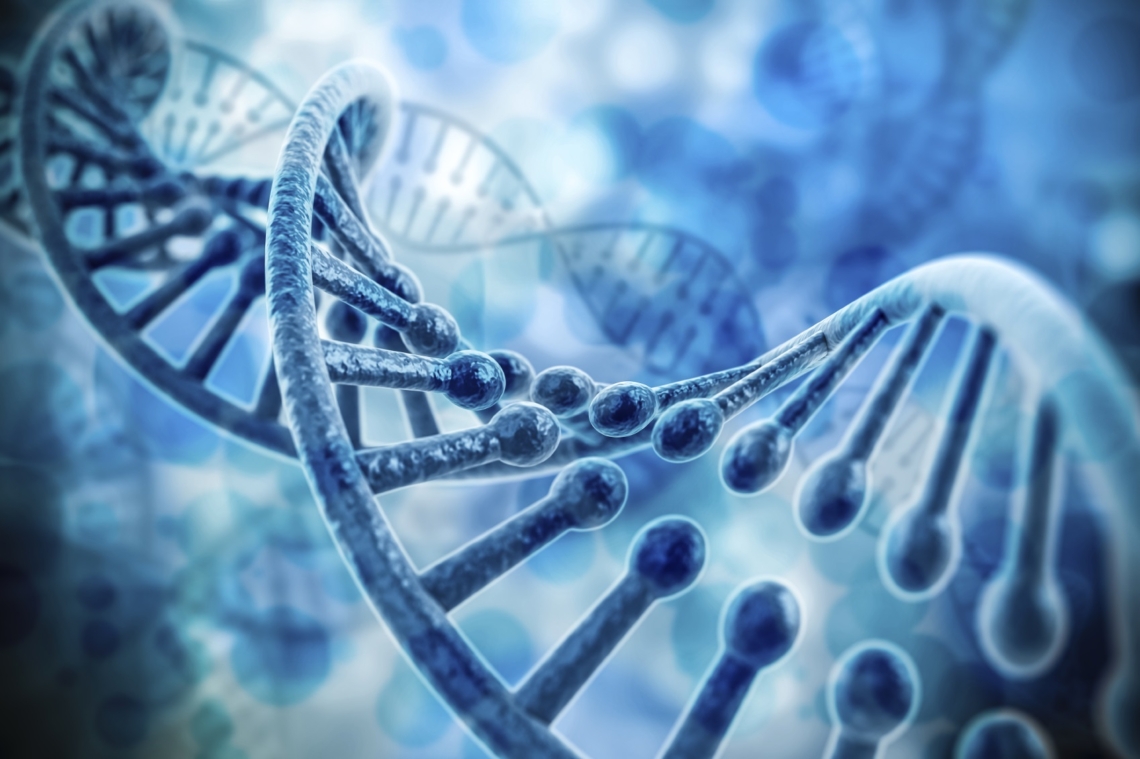
In 2003, the Human Genome Project ended with all the splendour expected of a great scientific success [1]. Such a huge effort and achievement from scientists across the globe is not to be understated but while the Human Genome Project revolutionised the landscape of biology at the time and was at the very forefront of cutting-edge technology, genome sequencing was limited until the advent of more modern technologies. And as a result, when scientists declared the project complete, there was actually about 8% of the genome still left unsequenced.
But, with true scientific spirit, researchers remained in pursuit of answers and in March 2022 the Telomere-to-Telomere (T2T) consortium published the news that would transform human genomics research. T2T had sequenced an entire human genome for the very first time – this time, with no stone left unturned [2,3].
Non-coding DNA: finding hidden treasure among the junk?

One of the key findings of the Human Genome Project was the revelation that the number of protein coding genes was considerably lower than first thought. Prior to sequencing, scientists estimated that humans had in the region of between 35,000 and 100,000 protein coding genes. This was, at the latter end, a gross overestimation, with the project demonstrating that there were actually only ~20,000 protein coding genes – making up about 1.5% of the genome [4].
While protein coding genes are simpler to understand due to the fact that they produce a functional product (protein), a big question arose about the functionality of this vast majority of DNA that does not code for proteins. Initially, this DNA was dubbed, somewhat prematurely, “junk” DNA, with many scientists believing there was no real purpose. Instead, the suggestion was that it was redundant leftovers or genomic waste.
Despite this, research quickly advanced with the advent of newer sequencing technologies and demonstrated that non-coding DNA was in fact performing a vital role within the genome. In the last decade, research to help understand how non-coding DNA can promote, enhance, and silence genes coding for proteins has skyrocketed.
Let there be light! Illuminating the dark genome
Along with the realisation that non-coding DNA was in fact not “junk”, it became clear that the missing 8% of the human genome might be more important than originally assumed.
Indeed this missing 8% of sequences all belong to the category of non-coding or “junk” DNA that was recently renamed the ‘dark genome’, capturing the mystery surrounding its purpose and function [4]. Tiptoeing gently into the world, research into the dark genome started way before the Human Genome Project was completed, but in more recent years it has seen rapidly increasing interest. Evan Eichler, a researcher at the Howard Hughes Medical Institute, is one of the scientists who has been interested in the dark genome from the very beginning [2]. Originally a researcher for the Human Genome Project, Eichler knew then that his interests lay in the dark genome and the missing 8%. Now, more than 20 years later, he is part of 100 scientists that form the T2T consortium. Led by Adam Phillippy of the National Human Genome Research Institute (NHGRI) and Karen Miga of the University of California, Santa Cruz, the team have finally published a full human genome sequence that includes the entire dark genome. For long-haulers like Eichler, it is the culmination of a career’s worth of work that now, finally, (in his own words) “we are seeing chapters that were never read before.” [2]
A puzzle of complexity: the Repeatome

Sequencing the final 8% of the human genome was a dream that laid in wait while technology caught up. One of the major barriers to progression was the fact that large sections of the dark genome – and much of the missing 8% – consisted of repeating regions of DNA.
Traditional sequencing techniques used by the Human Genome Project require DNA to be chopped into small pieces and reassembled, much like a puzzle. In an area where DNA repeats itself, scientists are left with a puzzle containing many identical pieces that are impossible to reassemble in the correct order. Frustratingly though, these areas hold great interest for researchers in a broad range of fields including evolution, autoimmune disease, and cancer [2,5,6,7].
More than half the human genome contains repeat DNA sequences, making up what is known as the repeatome; functionally these areas are very poorly understood. Many of them still have no known function and remain an enigma to scientists to this day [5]. Luckily, having the ability to sequencing these areas with newer technologies is a big step in the right direction.
The final chapter or just the beginning?
One sequenced human genome, while an impressive milestone, does not spell the end for this project. T2T’s research has highlighted the genetic variation between humans so many more sequenced genomes are ahead of these scientists, along with intensive research to understand the purpose and functionality of these newly sequenced areas [2].
For now, however, it is perhaps best to bask in the success of this monumental achievement and to look forward to all the exciting developments that it has paved the way for.
References
1. Eric D. Green. Completing the Human Genome Sequence (Again). 2022; Available from: https://www.scientificamerican.com/article/completing-the-human-genome-sequence-again/.
2. Howard Hughes Medical Institute. Complete human genome deciphered for the first time. 2022; Available from: https://www.sciencedaily.com/releases/2022/03/220331151528.htm.
3. Sergey Nurk, et al., The complete sequence of a human genome. Science, 2022. 376(6588): p. 44-53.
4. John Presner. The dark genome: new sources of cancer proteins? 2021; Available from: https://bioengineeringcommunity.nature.com/posts/d.
5. Anthony J. Hannan, Tandem Repeats and Repeatomes: Delving Deeper into the ‘Dark Matter’ of Genomes. EBioMedicine, 2018. 31: p. 3-4.
6. Michael Molla, et al., Triplet repeat length bias and variation in the human transcriptome. Proceedings of the National Academy of Sciences, 2009. 106(40): p. 17095-17100.
7. RO.ME Theraputics. The Repeatome. 2022; Available from: https://rometx.com/the-repeatome/.