
Pigs and Pancreas’ – using gene editing to grow human organs for transplant in pigs
21st June 2016 - Last modified 5th July 2024
Written by Dr Kelly Hooper.
The revolutionary but sometimes controversial CRISPR/Cas9 gene editing technique is rarely far from the headlines. Unsurprisingly, it is also a popular topic on the Alto blog, with recent posts from Omee, our Digital & Scientific Marcomms Specialist, on the next step in gene editing and another from Isabel, our Senior Science Writer, about treading carefully in the era of gene editing.
While the discovery and subsequent commercialisation of this gene editing technique has undoubtedly brought many advances in scientific research over the last couple of years, it has also raised several ethical questions and concerns, as shown by a recent news story that captured my attention.
Last week, the BBC’s Panorama programme was given exclusive access to research from a team at the University of California, Davis who are making use of CRISPR gene editing to try to grow human organs for transplant, inside pigs. This work has been ongoing for a number of months but has only recently made headlines in the international and scientific press following the Panorama programme entitled “Medicine’s Big Breakthrough: Editing Your Genes”.
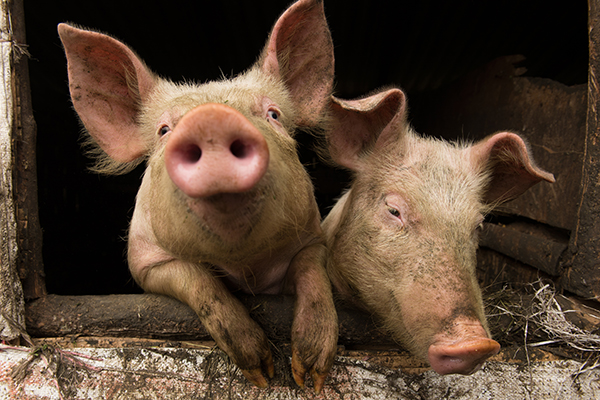
The researchers explained how they are using CRISPR gene editing to remove DNA from a newly fertilised pig embryo that would usually enable the resulting foetus to grow a pancreas. This creates a genetic niche/void. Human induced pluripotent stem cells (iPSCs) are then injected into the embryo with the hope that these human stem cells will take advantage of the genetic niche and the resulting foetus will grow a human pancreas. There is a great article on the New Scientist website with a video called “This little piggy grew a human pancreas” that explains the process further if you’re interested.
Pablo Ross, a reproductive biologist who is leading the research told the BBC: “Our hope is that this pig embryo will develop normally but the pancreas will be made almost exclusively out of human cells and could be compatible with a patient for transplantation.”
However, the creation of these human-pig chimeras is very controversial. The US National Institutes of Health announced last year that it would not fund research of this kind that involves the introduction of human iPSCs into non-human embryos. It said that the state of the science, ethical issues and animal welfare considerations all needed to be evaluated before funding should be allowed. These concerns were echoed in the media last week, as well as fears that human cells might migrate to the developing pig’s brain, resulting in the pig becoming “more human”. A scary possibility.
Of course, if this research is successful then the potential benefits are huge. There is a major shortage of human organs around the world, with many people dying while waiting on the transplant list for a suitable organ to become available. Even if an organ is available and a transplant is successful then the patient will need to take immunosuppressant drugs that have a number of side effects and risks, including an increased susceptibility to cancer.
What do you think about this story? Is this a fantastic new development or taking our scientific capabilities too far?
Make sure your story is seen in a positive light
Luckily, most scientific news releases don’t have such moral and ethical issues. However, if you are concerned about possible negative perceptions with your news item, we at Alto Marketing can help. We’ll work with you to find the best way to communicate your news, making sure that we prepare for, and address, any potential pitfalls.
If you would like to find out more about our strategic PR and scientific writing services, then please do get in touch
Written by Dr Kelly Hooper- Account Manager