
Leprosy Bacteria Could Hold the Key to Organ Regeneration
1st February 2023 - Last modified 18th October 2023
By Pete Cussell PhD, Science Writer
The global demand for organ transplants is soaring, and has prompted a surge in research seeking to find innovative ways to regenerate organs. One such research project has recently made a breakthrough with results set to have significant implications for organ regeneration. Curiously though, the source of this breakthrough happens to be the strain of bacteria responsible for leprosy.
Leprosy, which is also known as Hansen’s disease, is a severe chronic infection that conjures biblical imagery of pestilence. Caused by the bacteria Mycobacterium leprae, the disease primarily affects the skin and peripheral nerves. Left untreated, it can cause progressive and permanent damage to the skin, nerves, limbs, and eyes.
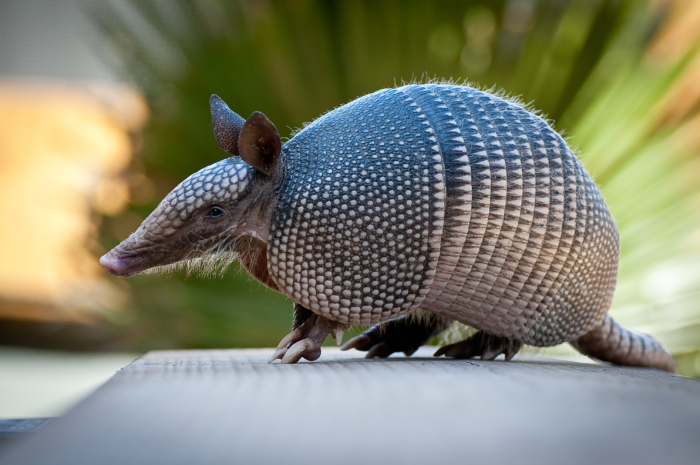
A research team headed by Prof. Anura Rambukkana, who is currently based at the Centre for Regenerative Medicine at the University of Edinburgh, set out to study the pathophysiology of M. leprae infection using animal models. When studying armadillos, the team began to observe some peculiar responses in the infected animals. Rather than behaving in an entirely destructive manner, as one might expect, the bacteria instead went about making some subtle changes to the physiology of the host organism.
An Opportunist Organism
Initial investigations discovered that M. leprae has a natural ability to alter the plasticity and regenerative properties of adult Schwann cells, which are the supporting cells that surround neurons. By hijacking the Schwann cells, M. leprae was shown to reprogramme them into a stem cell-like state by changing their gene regulation [1]. Once in a stem cell-like state, the cells become more plastic and migratory, and M. leprae exploits them to disseminate infection throughout the body.
The interesting effects observed in the neuronal tissues spurred the researchers to delve deeper into this strange bacterial strain. Once again, the team turned to their trusty armadillos in search of other unique findings.
To their surprise, the researchers found an even more astonishing behaviour of M. leprae. When they observed the livers of infected armadillos, they were found to be approximately twice the size of healthy individuals. Livers are known to swell in certain circumstances, following injury or if the individual has a liver tumour, for example. In this case though, none of the armadillos tested had any prior liver dysfunction [2].
Further studies showed that the swollen livers were in fact completely healthy, and had grown with all the architecture you might expect of a healthy liver. This included healthy liver lobules and hepatocytes, with a proportionate expansion of vasculature and biliary systems to match. But why might a bacterial strain want to improve the liver function in their hosts?
A Hepatic Hijacking
Upon deeper investigation, it appears that M. leprae hijacks the liver. In the same way that the bacteria prompted mature Schwann cells to revert back into a stem cell-like state, it seems to also reverse the developmental clock in the liver. Analysis of the infected livers’ gene expression showed upregulation of genes associated with foetal development. By reverting the liver back to a developmental-stage state, the bacteria can create favourable conditions to multiply rapidly and spread infection throughout the body.
Although the precise mechanism by which this occurs is poorly understood, the manifestation of a rapidly enlarging, healthy liver could have huge ramifications in the regenerative medicine sphere. The hope for the future is that this phenomenon could be harnessed to repair the livers of people waiting for a transplant – or perhaps even used to reverse liver damage in those with liver injury or fibrosis. The impact on organ regeneration research is huge! Speaking to Sky News, Prof. Anura Rambukkana said:
“If we can identify how bacteria grow the liver as a functional organ without causing adverse effects in living animals, we may be able to translate that knowledge to develop safer therapeutic interventions to rejuvenate ageing livers and to regenerate damaged tissues.” [3]
Before this can become a reality though, the molecular pathways involved must be uncovered. After all, the M. leprae strain itself causes deadly disease, and would be unlikely to be beneficial in its natural form in the clinic.
Nevertheless, this discovery is hugely significant, and has sparked a great deal of excitement in the regenerative medicine field. Could we soon see an end to the enormous waiting lists of people needing a liver transplant? Could this novel organ regeneration response be the answer? Let’s hope so!
At Alto, we love science news! Talking about it, reading about it – and of course writing about it. To find out more about our science writing expertise, contact us!
References
(1) Masaki, T., Qu, J., Cholewa-Waclaw, J., Burr, K., Raaum, R., & Rambukkana, A. (2013). Reprogramming adult Schwann cells to stem cell-like cells by leprosy bacilli promotes dissemination of infection. Cell, 152(1-2), 51–67.
(2) Hess, S., Kendall, T. J., Pena, M., Yamane, K., Soong, D., Adams, L., Truman, R., & Rambukkana, A. (2022). In vivo partial reprogramming by bacteria promotes adult liver organ growth without fibrosis and tumorigenesis. Cell reports. Medicine, 3(11), 100820.