
Adapting to a warming world
2nd November 2022 - Last modified 5th July 2024
20 years of Alto. 20 years of science. #13
By Bree Foster PhD, Science Writer

As part of Alto Marketing’s 20 year celebrations, we’re looking back at some of the most important advances in science over this time in our blog series “20 years of Alto. 20 years of science.” We gave each of the scientists in the Alto team the chance to write about an area they love or that they’ve worked on during their research careers. In this blog, we hear from one of our science writers, Bree Foster, about her research into drought-resistant plants and the impact that the genetic modification of traditional and biofuel crops could have on how we adapt to climate change.
Climate change is already happening
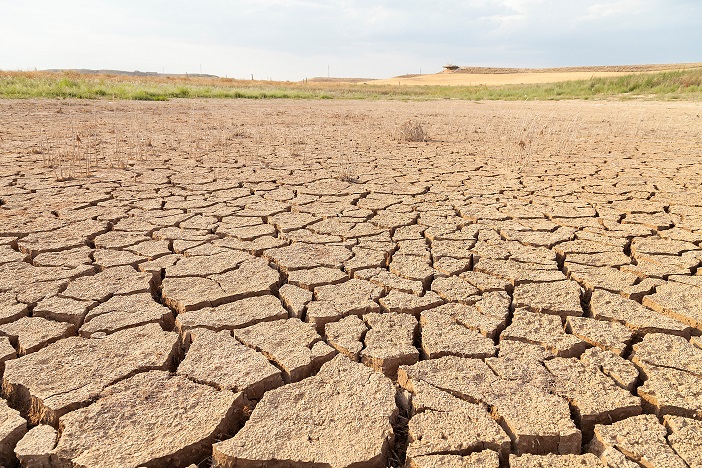
As CO2 levels rise and the atmosphere continues to warm, countries all over the world are experiencing more extreme weather events – from the disastrous floods in Pakistan to the worst megadrought in the last 1200 years in the American west [1,2]. This year, the UK has also had the driest July since 1935 and seen record-breaking temperatures that exceeded 40°C for the first time ever on July 19th. As a result, the UK suffered from drought and our green countryside turned various shades of yellow and brown [3].
With droughts becoming more commonplace and extreme, we have to consider where our water goes. And how we can cut back.
Where does our water go?
Globally, the irrigation industry uses the largest amount of water, with various estimates suggesting that over 70% of freshwater reserves are used by this sector [4,5]. This figure is even higher in many developing countries and is projected to increase further as summertime temperatures continue to rise and as more crops and biofuels are produced to meet the growing demand for food and energy [6].
How can we preserve water and produce food?
One way we can adapt to our warming world is to produce drought-resilient crops. These crops are genetically altered so that they can endure harsh environmental conditions like drought and remain productive.
Numerous genes and their associated signalling pathways have been identified as a result of decades of research into how plants react to drought stress. There are many ways to investigate which genes are involved in the drought stress response in plants. Usually this will involve comparison of gene expression between well-watered plants and drought-stressed plants.
Genes that are differentially expressed during drought stress are then targeted for further analysis. This often includes changing the expression of a gene through over-expression or interference techniques and studying the effect that this has on the plant. Once there is enough evidence that a gene seems to confer drought resistant properties, that gene can be cloned and transformed into other plant genomes. Many engineered plants have already manifested improved stress-resistance phenotypes through bioengineering [7].
A shift in timing could be all that we need
One way to improve drought resistance in plants is to target photosynthesis.
Photosynthesis is the miracle process that converts sunlight into food and gives us starchy goodness in the form of potatoes, rice, wheat and more. Usually, photosynthesis is performed by drawing carbon dioxide (CO2) into the plant leaves through tiny pores called stomata. This CO2 can then be converted into sugars and starches using light energy. However, during the warm day-period, many water molecules will also escape from the plant leaves using those same pores. This makes photosynthesis a water-intensive activity as lots of water is lost from the plant during this time. However, plants that live in hot, dry regions, like cacti, have formed a solution to this problem known as crassulacean acid metabolism or CAM.
For scientists looking at solving the drought problem, this version of photosynthesis is particularly interesting – interesting enough for me to have studied it for the last five years through my PhD project!
The most essential aspect of CAM is that it uses significantly less water than photosynthesis carried out in normal crops [8]. As a result, CAM plants are able to better tolerate dry conditions and live in extreme environments.
This adaptation is achieved because the stomata open and close according to different conditions and timing. In CAM plants, the pores remain closed during the day when the sun is out to prevent water loss. And instead, their pores open at night – when it’s cooler – to collect CO2. This CO2 can then be stored until the daytime when it is processed into sugars in the normal fashion.
This simple but ingenious mechanism allows plants to thrive in otherwise extreme and hostile environments.
How to save water with CAM
Researchers are now starting to identify the essential components of CAM photosynthesis in the hopes of bioengineering this pathway into water-intensive crops like rice, wheat, soybeans, and poplar [9]. This would help to mitigate the effects of extreme weather and provide a more stable future for agriculture.
Furthermore, if the mechanism for CAM could be engineered into biofuel crops, these could be grown on land that is typically not used for agriculture or industry due to poor soil conditions or a lack of water resources. This would mean that they wouldn’t be competing for available land space with crops that are essential for human nutrition.
The future of crops
The genetic modification of traditional and biofuel crops is becoming a necessary prospect, especially as our planet’s population grows. The UK government has responded to this urgent need by enacting new legislation that removes unnecessary red tape for gene editing in plants, allowing farmers to grow more resilient, nutritious, and productive crops [10].
This legislation will be vital to ensure that we are doing the necessary science to find crops that can thrive in a changing climate. The climate crisis will not be solved with a silver bullet but instead through a whole field of collective ideas and solutions.
About me:
I always loved Biology at school, particularly genetics. Although my interest tended to be human-orientated, it did sometimes include plants too. The first science book I bought was called ‘Eating the Sun’ by Oliver Morton and it included this quote: “The Sun’s energy, stored by plants, keeps us alive moment by moment, heartbeat by heartbeat, thought by thought. Our bodies are stardust; our lives are sunlight.” I loved this quote enough to also include it in my thesis.
As a young girl, I was aware of the climate crisis and very worried about its effects – I remember thinking ‘if only we could genetically engineer plants to photosynthesise more efficiently and take in loads of carbon dioxide and fix global warming’. And while my contribution to research didn’t achieve this outrageous goal, I do know a lot more about genetically engineering plants to be more efficient! I believe it proves that lofty goals, despite seeming foolish or unbelievable, can nevertheless guide your path and propel you toward greatness – even if the end result isn’t what you initially had in mind.
References
1. Goldbaum, C. and ur-Rehman, Z. (2022) ‘In Pakistan’s Record Floods, Villages Are Now Desperate Islands’, The New York Times, 14 September. Available at: https://www.nytimes.com/2022/09/14/world/asia/pakistan-floods.html (Accessed: 4 October 2022).
2. Williams, A.P., Cook, B.I. and Smerdon, J.E. (2022) ‘Rapid intensification of the emerging southwestern North American megadrought in 2020–2021’, Nature Climate Change, 12(3), pp. 232–234. Available at: https://doi.org/10.1038/s41558-022-01290-z.
3. Driest July in England since 1935 (2022) Met Office. Available at: https://www.metoffice.gov.uk/about-us/press-office/news/weather-and-climate/2022/driest-july-in-england-since-1935 (Accessed: 23 September 2022).
4. Land and Water Division (2005) Water at FAO: Information note. Rome, Italy: FAO. Available at: https://www.fao.org/documents/card/en/c/3b863035-909e-5049-9bc4-9611fde1b75f/ (Accessed: 4 October 2022).
5. Gleick, P., H. (2014) The World’s Water: The Biennial Report on Freshwater Resources. Washington, DC: Island Press. Available at: https://link.springer.com/book/10.5822/978-1-61091-483-3 (Accessed: 4 October 2022).
6. IPCC (2014) AR5 Climate Change 2014: Impacts, Adaptation, and Vulnerability. Available at: https://www.ipcc.ch/report/ar5/wg2/ (Accessed: 4 October 2022).
7. Martignago, D. et al. (2020) ‘Drought Resistance by Engineering Plant Tissue-Specific Responses’, Frontiers in Plant Science, 10. Available at: https://www.frontiersin.org/articles/10.3389/fpls.2019.01676 (Accessed: 24 October 2022).
8. Borland, A.M. et al. (2009) ‘Exploiting the potential of plants with crassulacean acid metabolism for bioenergy production on marginal lands’, Journal of Experimental Botany, 60(10), pp. 2879–2896. Available at: https://doi.org/10.1093/jxb/erp118.
9. Borland, A.M. et al. (2014) ‘Engineering crassulacean acid metabolism to improve water-use efficiency’, Trends in Plant Science, 19(5), pp. 327–338. Available at: https://doi.org/10.1016/j.tplants.2014.01.006.
10. New powers granted to research gene editing in plants (2022) GOV.UK. Available at: https://www.gov.uk/government/news/new-powers-granted-to-research-gene-editing-in-plants (Accessed: 23 September 2022).